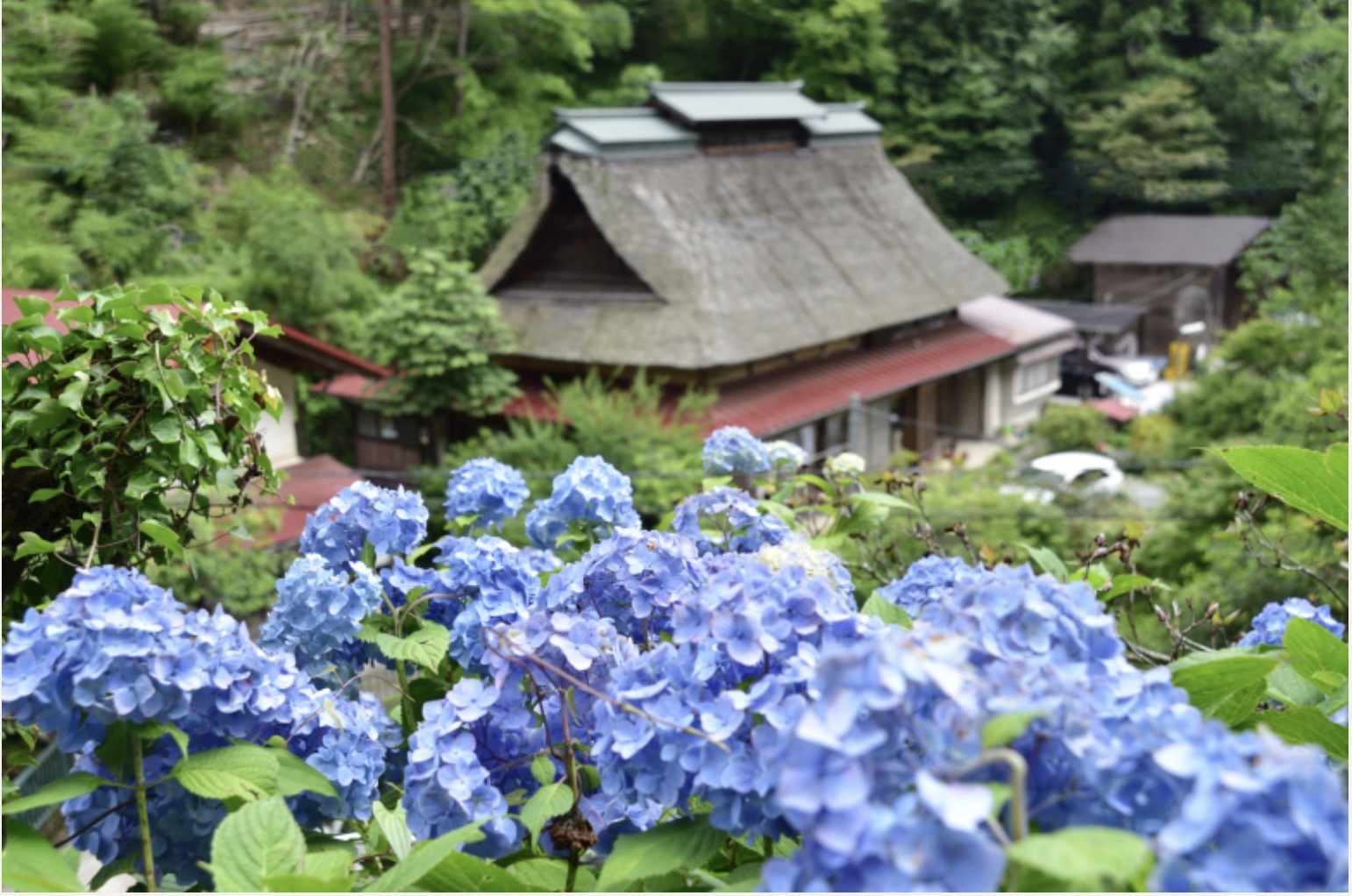
Akiruno City, deep in Tokyo’s backcountry, is way more than just its river valleys.
The real soul of the place lives in the foothills, the mountains, and the traditions shaped by generations who called this land home.
It’s not polished or flashy—but if you want to feel the real Japan, this is where it starts.
Walk slow. Follow old rhythms. Before you know it, this place might feel like your own hometown.
No rushing. No plans. Just let the day unfold.
Shichifukujin Pilgrimage (Seven Deities of Good Fortune Tour)
Shichifukujin Pilgrimage is a tradition found all across Japan, and Akiruno City is one of the places where you can enjoy it.
Pilgrims visit a set of temples and shrines, each honoring one of the Seven Deities of Good Fortune. It is especially popular around New Year and is believed to bring good luck, wealth, and longevity.
One unique aspect is that it includes both Buddhist temples and Shinto shrines. This reflects Japan’s long tradition of religious coexistence, where different beliefs have blended naturally over time.
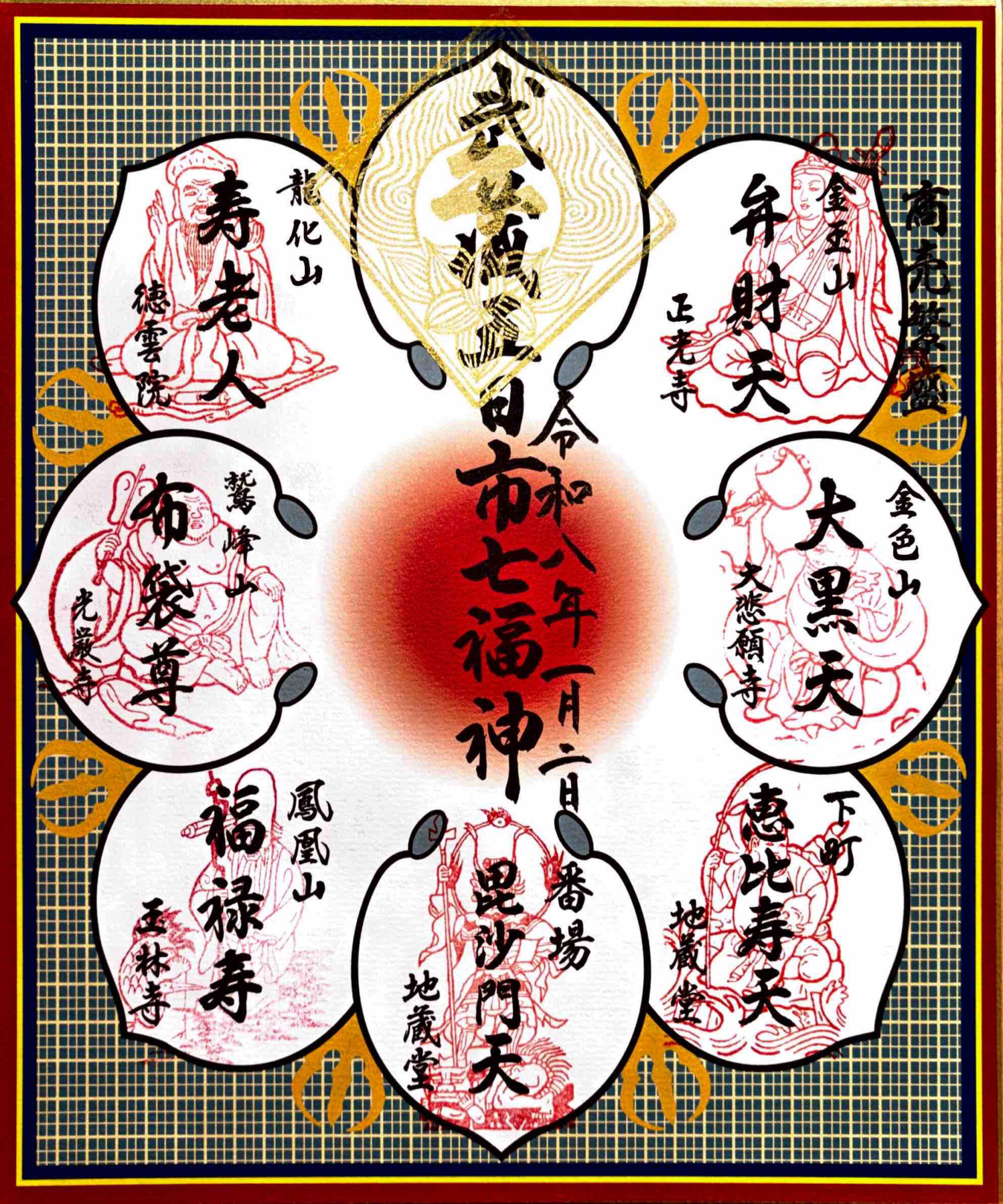
In Akiruno City, from January 1st to 3rd, the deities, which are usually kept hidden behind closed doors, are opened to the public. Pilgrims can see them up close and pray for peace, happiness, and prosperity in the year ahead.
During this special period, you can also receive beautifully illustrated Goshuin (temple and shrine stamps), like the ones shown in the photo.
Alternatively, if you’re visiting Tokyo in September, why not plan a day in Akiruno to enjoy the autumn Shichifukujin Pilgrimage? You may receive a Goshuin that differs from the one in the photo.
Seven Deities of Good Fortune (Shichifukujin);
They come from a mix of Shinto, Buddhist, and Chinese traditions and are especially associated with New Year celebrations in Japan.
The seven dieties are Ebisu (prosperity in business), Daikokuten (wealth and abundance), Bishamonten (protection and strength), Benzaiten (music, art, and wisdom), Fukurokuju (longevity), Jurojin (long life and wisdom), and Hotei (happiness and good fortune).
A. Start from JR Musashi–Itsukaichi Station
There are no fixed rules about the order of Shichifukujin Pilgrimage, so you can start from any location you like. However, if you’re visiting from outside Akiruno City, starting from JR Musashi-Itsukaichi Station (marked as A on the map) on the Itsukaichi Line is a convenient option.
It takes about 4 hours to visit the shrines and temples scattered across a five-kilometer area on foot. Enjoy the nature of the Akiruno Valley, take breaks at cafés along the way, and explore at a leisurely pace.

PR Your Stay Choice!
If you’re looking for a place to stay around Akiruno/Akigawa, just click the banner below!


B. Daikokuten, Daihigan-ji (Buddhist Temple)
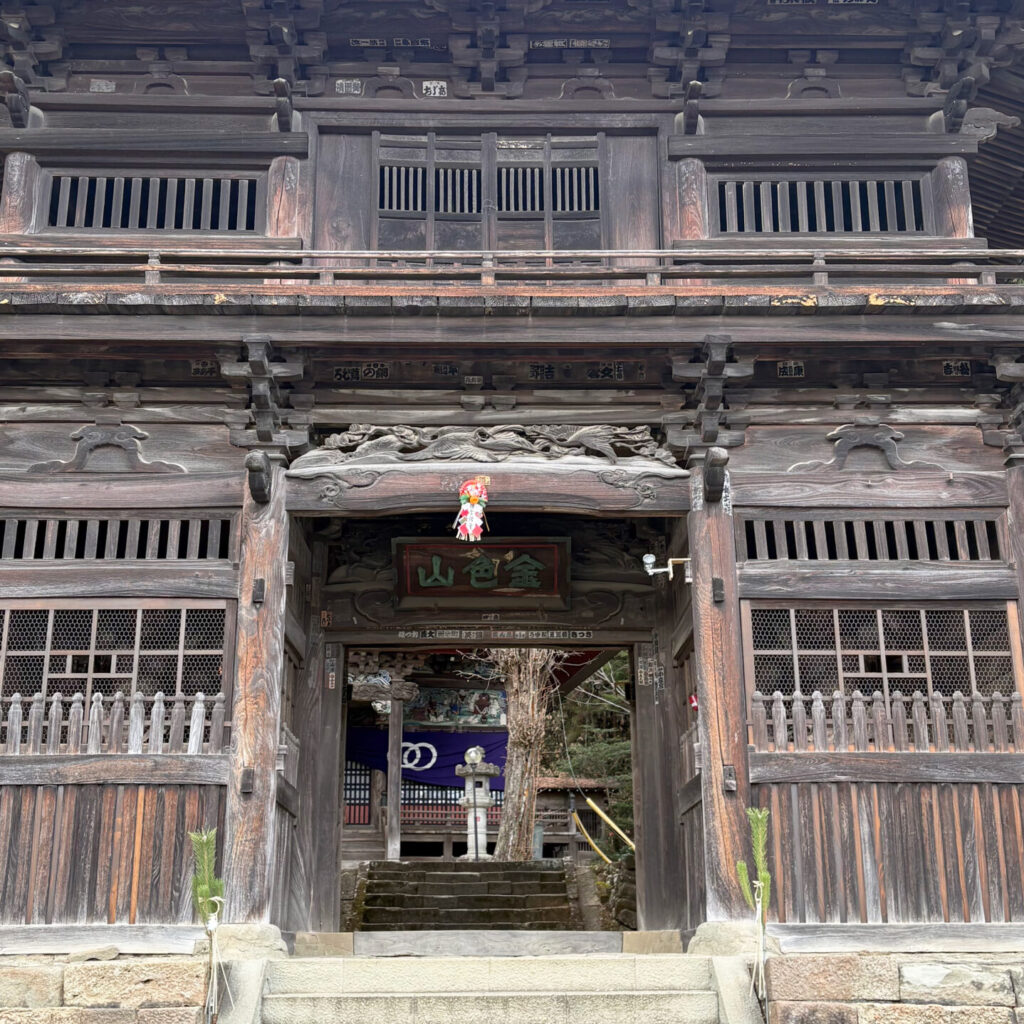
First, head east from the station toward Daihigan-ji, where Daikokuten (marked as B on the map) is enshrined. It takes about 20 minutes on foot, and the route is a pleasant country road that gently climbs along a hill, offering refreshing views down over the Akigawa River.
Daihiganji is an old and historic temple said to have been founded nearly 1,000 years ago. With its impressive main gate, beautiful halls, and peaceful grounds, it’s well worth taking some time to stroll around the precincts.
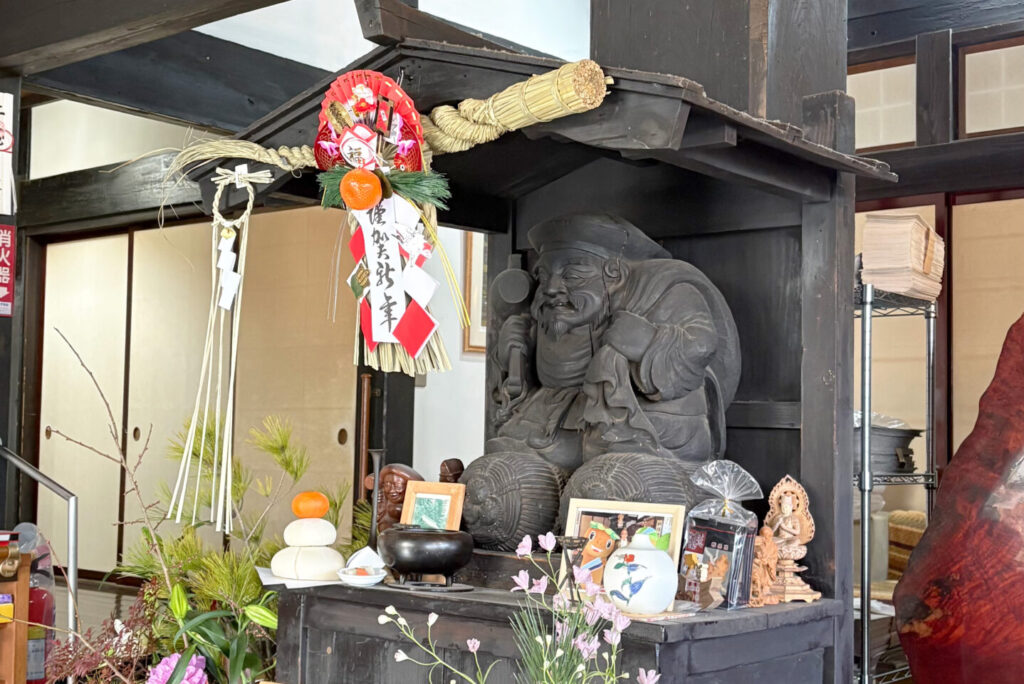
Daikokuten is enshrined in a separate building located to the right of the main hall. He is a deity associated with prosperity and abundance in everyday life—and is especially known for bringing better fortune with money and finances. A perfect deity to visit if you’re hoping for a boost in luck!
D. Benzaiten, Shoko-ji (Buddhist Temple)
Next, walk south for about 10 minutes to Shoko-ji, where Benzaiten is enshrined. (marked as D on the map)
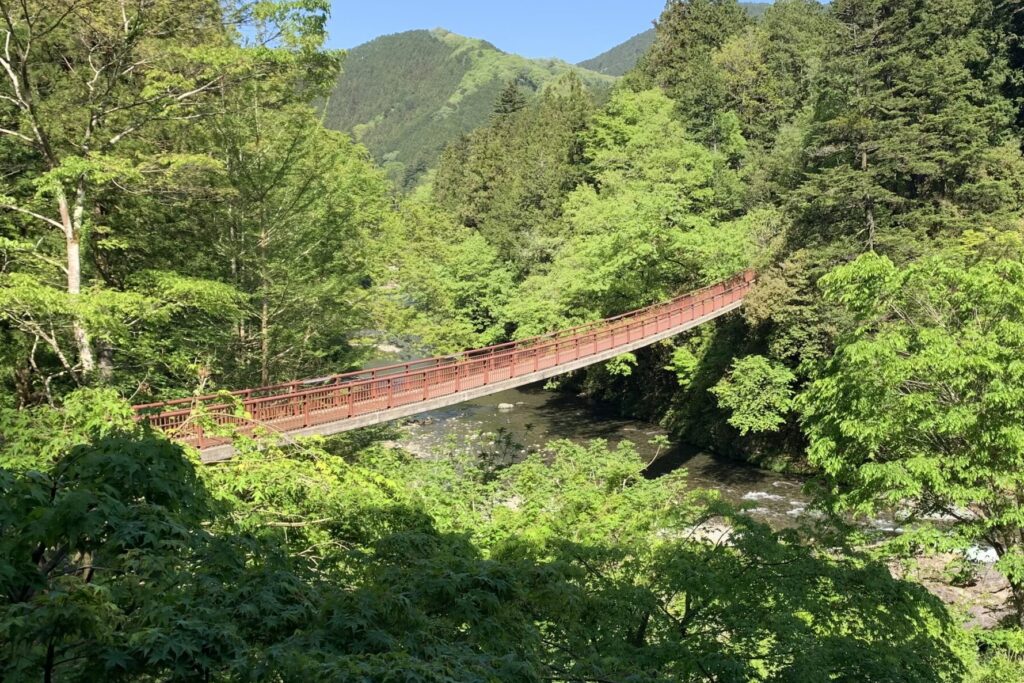
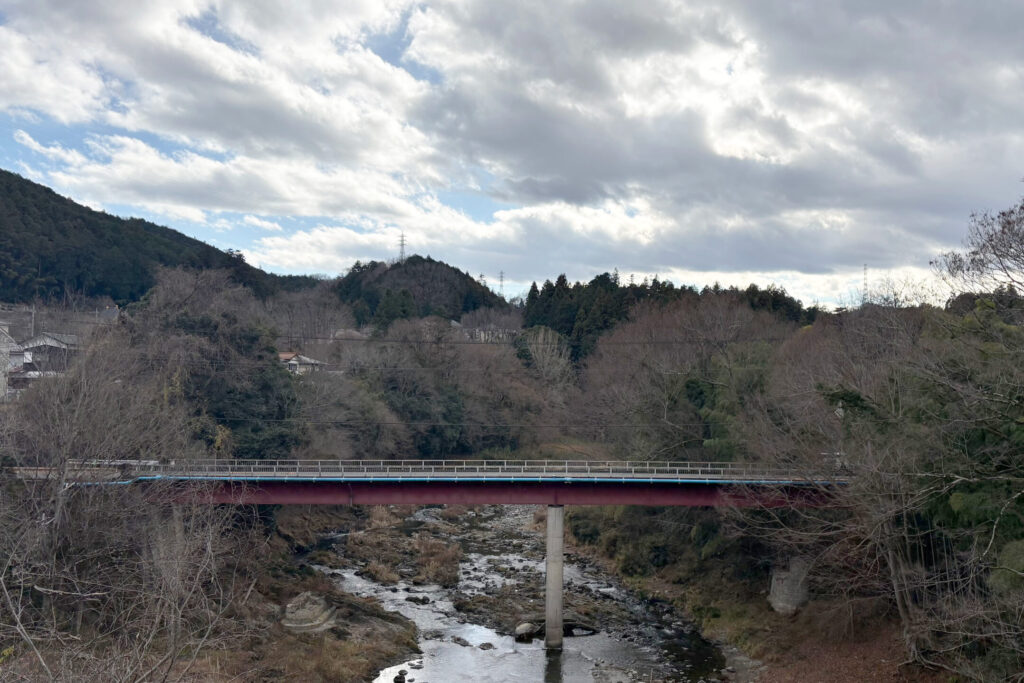
Right beside the temple, you’ll be greeted by a lovely scene like the one in the photo (marked as C on the map)—this area is part of the Akigawa Valley. The natural surroundings are enjoyable in every season: fresh green leaves in spring, deep lush greenery in summer, colorful foliage in autumn, and the quiet, dense forest atmosphere in winter.
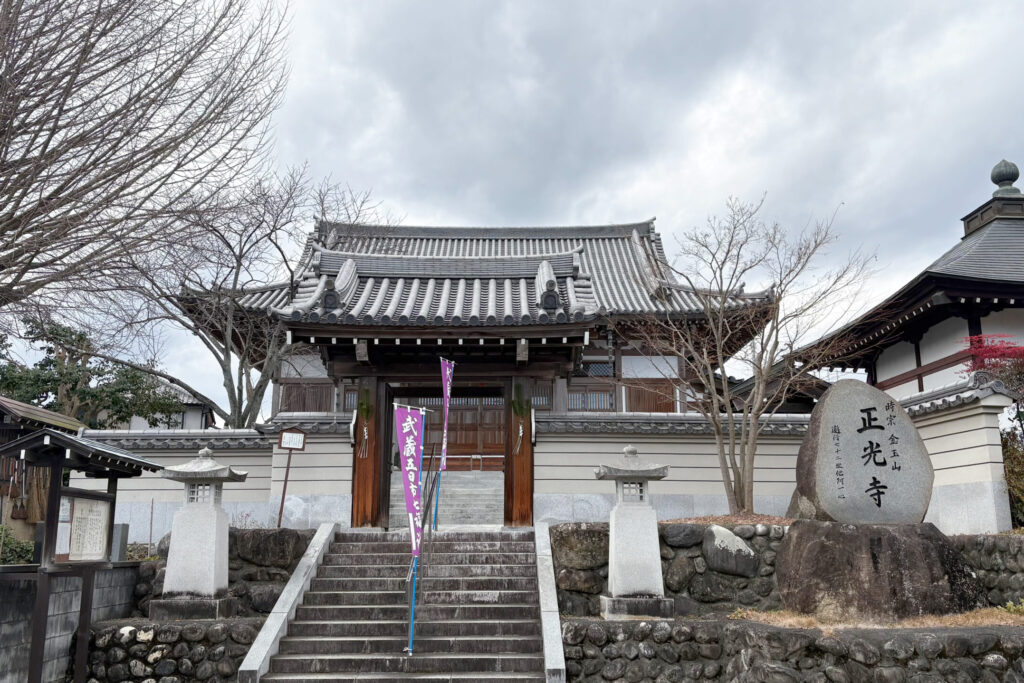
After going through the main gate, the building enshrining Benzaiten is right there on your right.
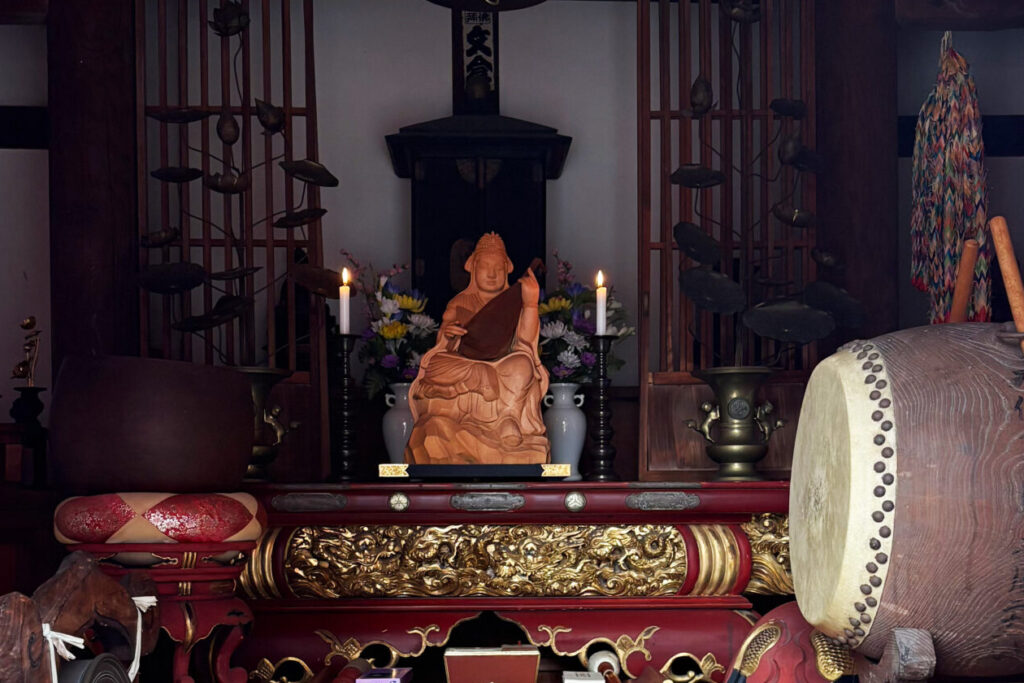
Benzaiten is a deity associated with the arts, especially music. So if you’re dreaming of becoming a musician, this is the perfect place to offer a heartfelt prayer and take your time paying respects!
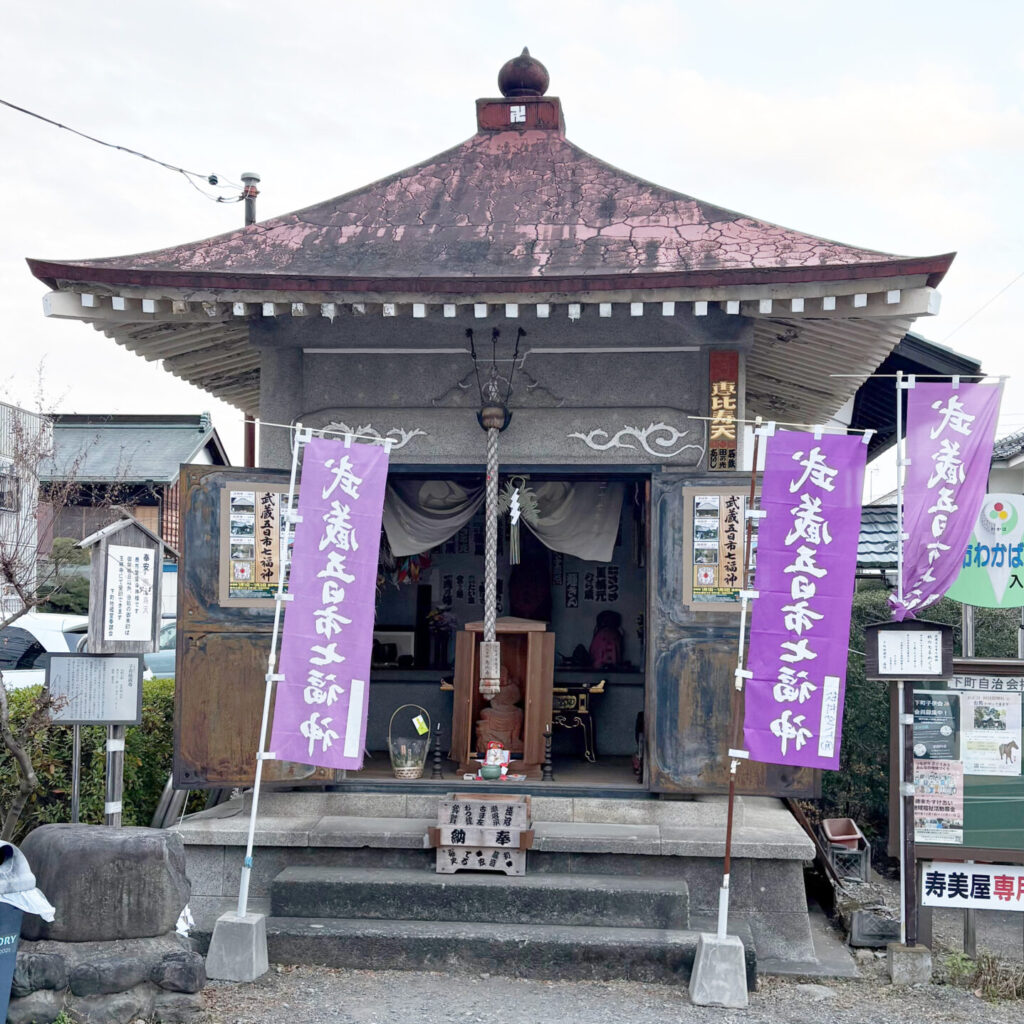
E. Ebis-ten, Shimocho Jizo-do (Jizo Hall)
Now it’s time to head back toward JR Musashi-Itsukaichi Station and take the sloping road that leads into the foothills of the mountains.
After about a 15-minute walk, you’ll reach Shimocho Jizo-do, where Ebisu-ten is enshrined. (marked as E on the map)
If you happen to visit between January 1st and 3rd, you can receive a Goshuin stamp at the small plaza located a little to the left of the hall. During those days, there are also a few food stalls offering light snacks and local treats. Since the same plaza has restrooms as well, it might be a nice spot to pause, relax, and refresh yourself before continuing on your pilgrimage.
Ebisu-ten is a deity of success in business and thriving commerce. So if you’re wishing for good fortune in your work or hoping your business will prosper, this is the place to come and make your prayer!
F. Fukurokuju, Gyokurin-ji (Buddhist Temple)
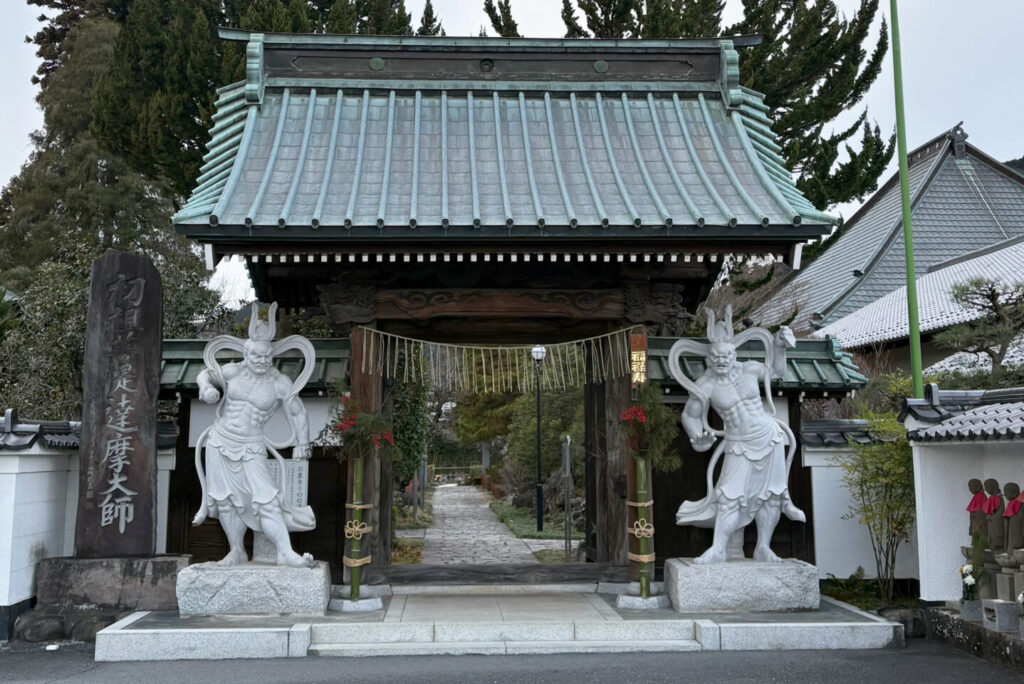
It’s about a 10-minute walk to Gyokurin-ji, where Fukurokuju is enshrined. (marked as F on the map)
As you can see in the photo, the main gate is guarded by powerful Kongo Rikishi statues, protectors watching over the temple. The two figures on the left and right are said to represent the beginning and the end of the world.
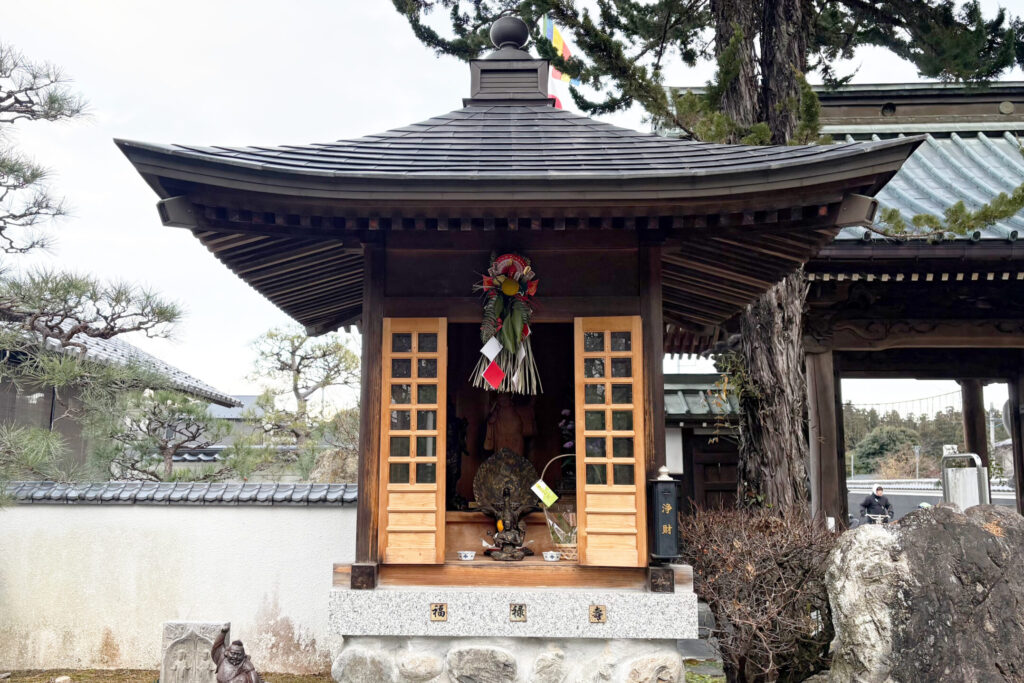
Once you pass through the gate, you’ll find a separate small hall on your right dedicated to Fukurokuju. He is the deity in charge of happiness, wealth, and long life—so this might just be the strongest and most impressive among the Seven Lucky Deities! A truly uplifting stop on your pilgrimage.
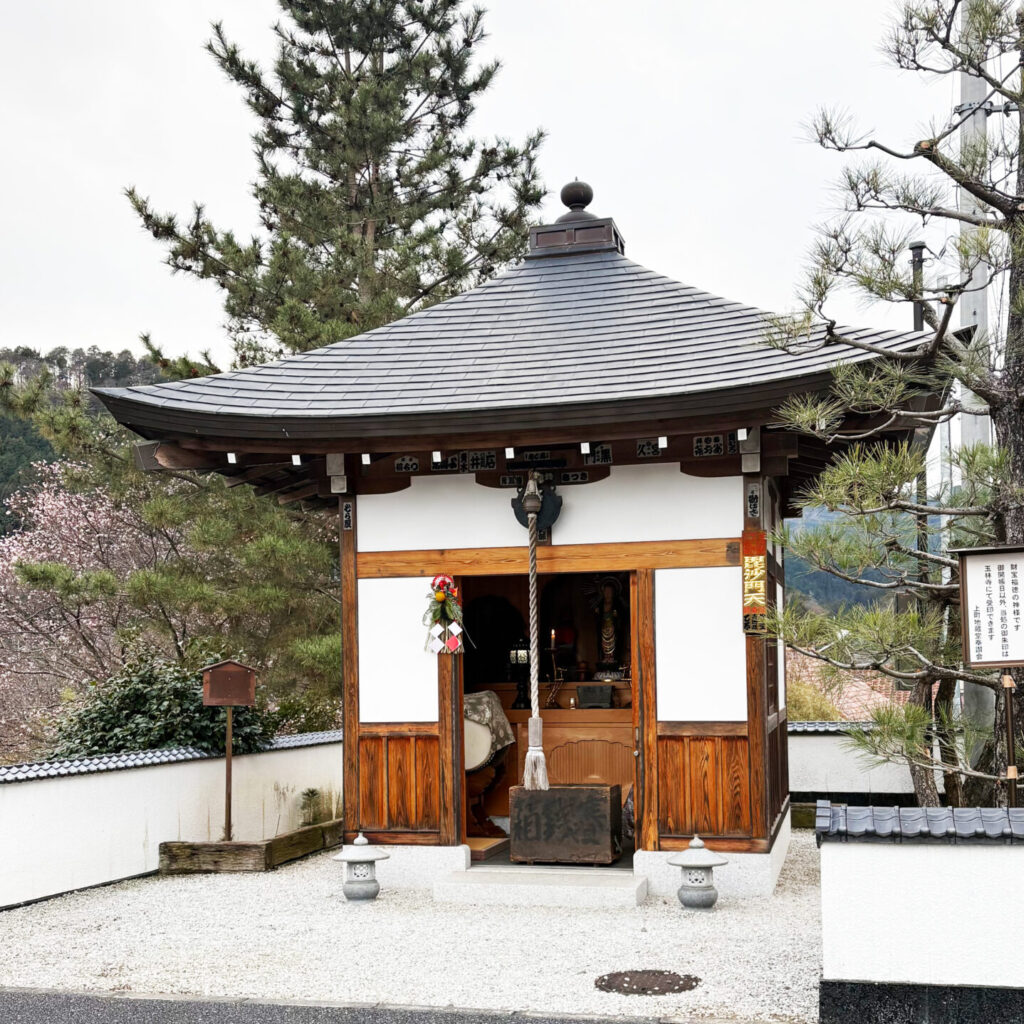
G. Bishamonten, Banba Jizo-do (Jizo Hall)
Though it isn’t marked on the map, just head north and pass through the cemetery grounds—you’ll arrive at Banba Jizo-do, home to Bishamonten, in 2 minutes or 3. (marked as G on the map)
Bishamonten is the deity of victory and good fortune. Known for his powerful strength to protect against outside threats, he is also revered as a deity who wards off misfortune. If there’s anything on your mind, why not seek his protection and blessing? Give it a try!
Enjoy a stroll along the Akigawa River and the surrounding valley
The next destination is a bit farther away—it takes about 30 minutes, and the slope of the road gets a little steeper too. Still, I’d love for you to pay attention to the scenery along the way.
On your left, you’ll see a beautiful valleys stretching out along the Akigawa River.
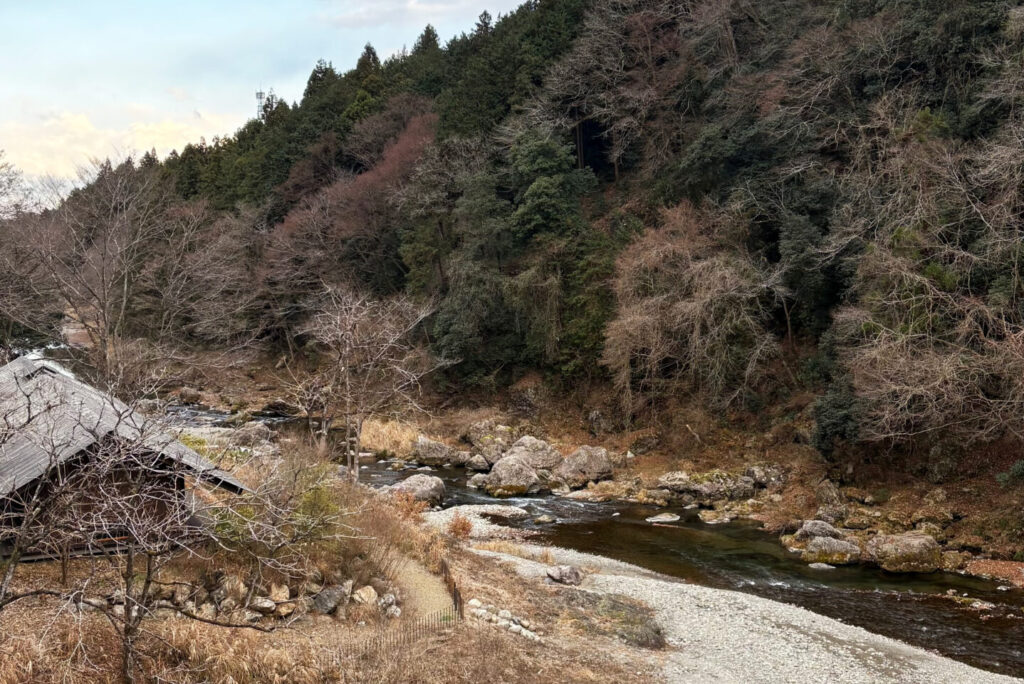
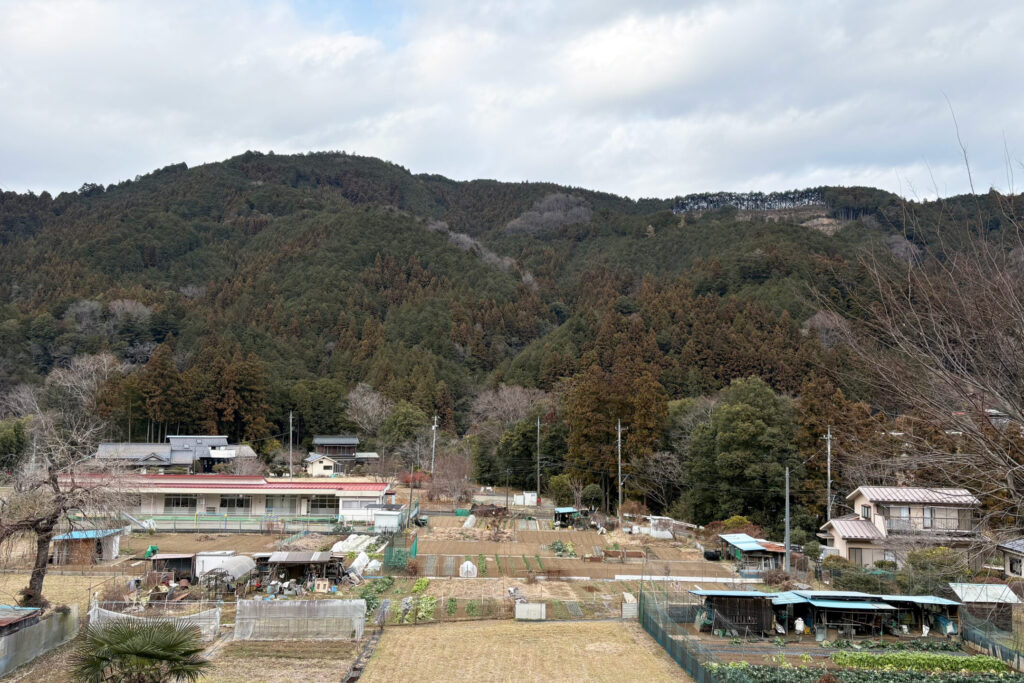
On your right, a peaceful Japanese countryside landscape unfolds. It might surprise you to realize, “Wow, even Tokyo has places like this!”
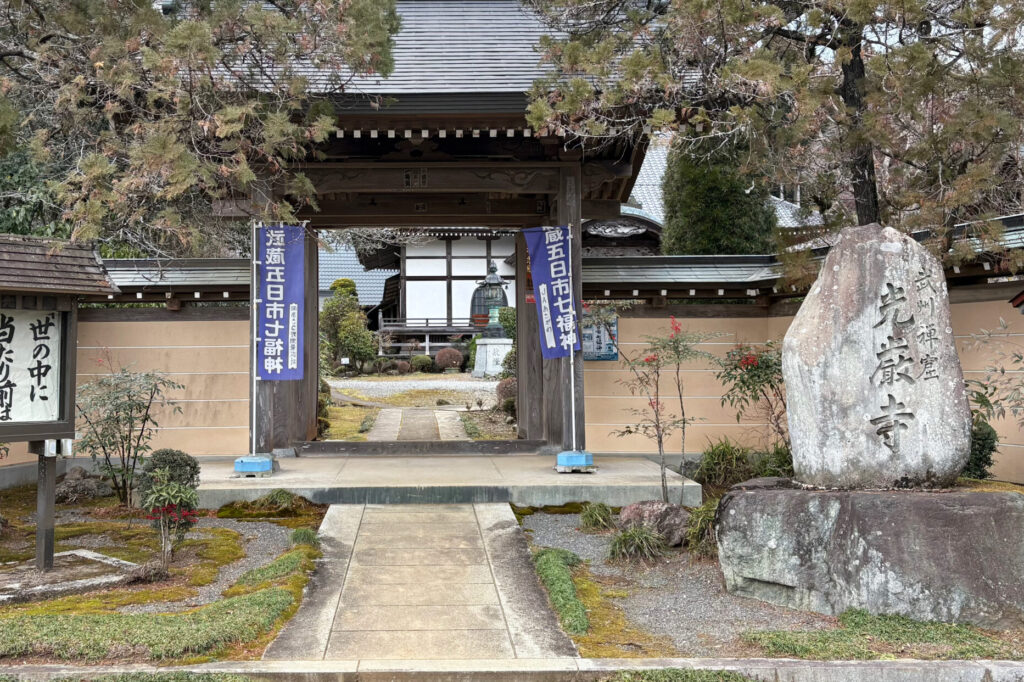
H. Hotei, Kogen-ji (Buddhist Temple)
Turn left off the main road, and the final stretch up to the temple is quite steep—but just one more push. This is Kogen-ji (marked as H on the map), founded about 700 years ago by the Shogun of the time.
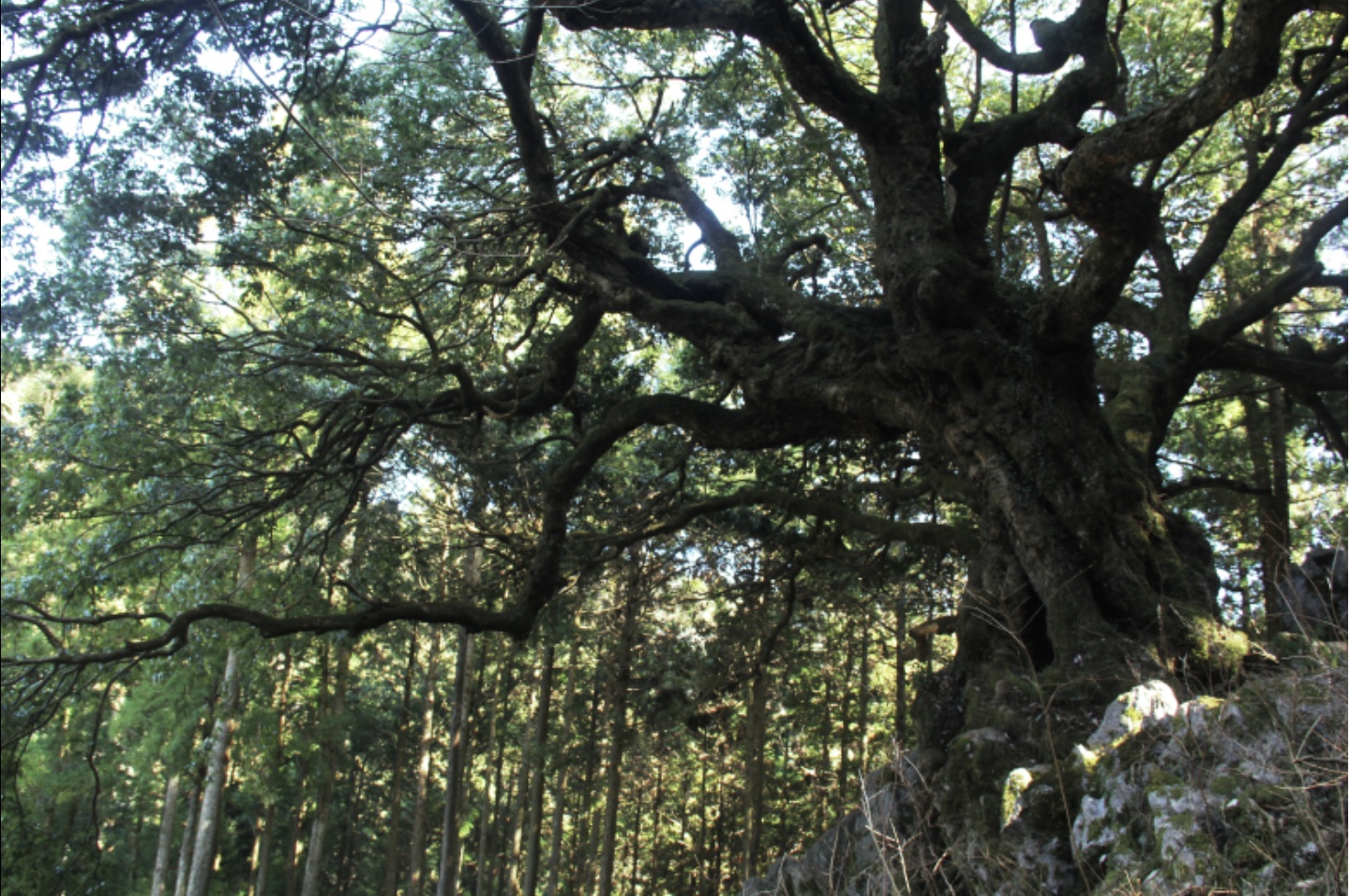
Today, it’s also known for its cherry tree said to be over 400 years old. If you’re visiting during cherry blossom season, it’s definitely worth stopping by.
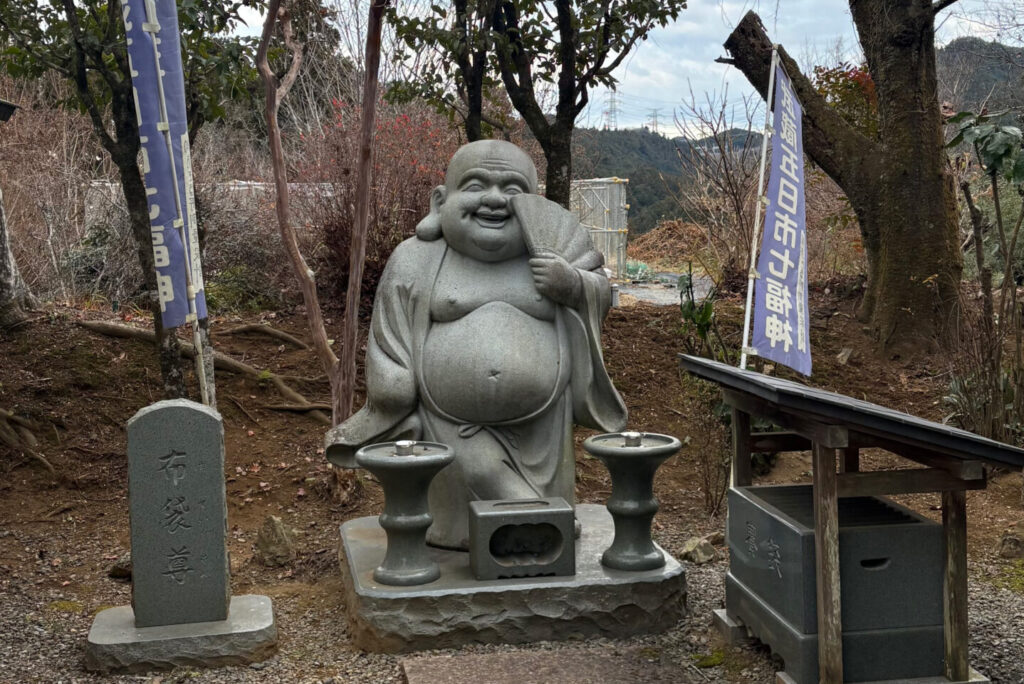
Just inside the main gate, on the left, you’ll find Hotei, the deity believed to bring good fortune in wealth, career success, and prosperity for future generations.
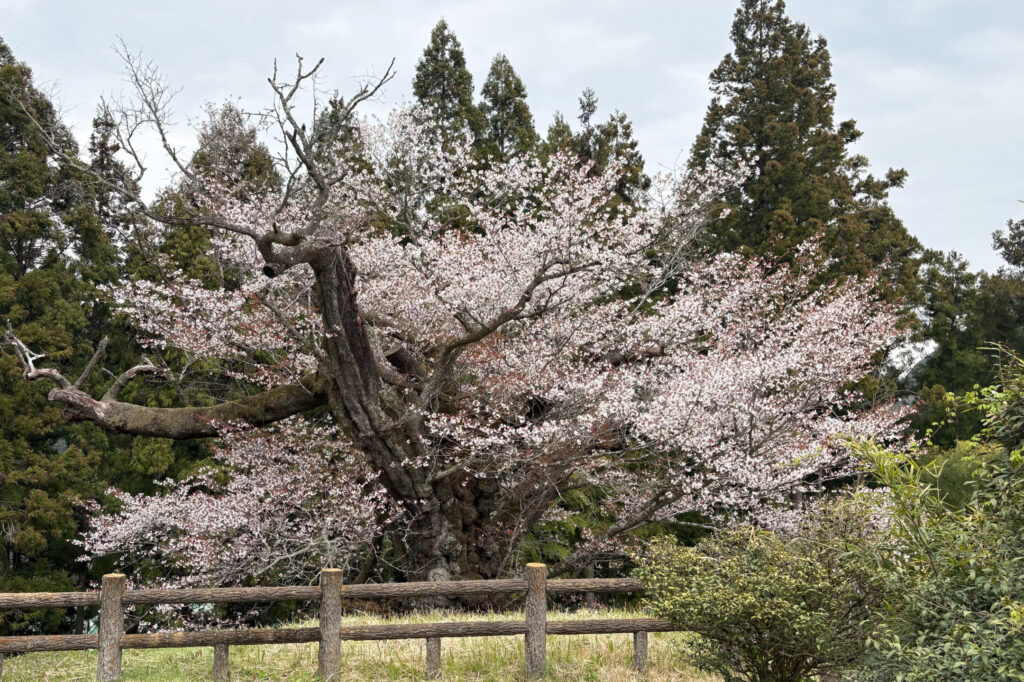
If you’re visiting Akiruno from late March to early April, it is highly recommended to check out one of Tokyo’s most impressive old cherry trees. Tucked beyond a temple gate on a hillside, the tree creates a scene that beautifully blends the elegance of spring with the powerful presence of nature.
I. Jurojin, Tokuunin (Buddhist Temple)
Next up is the final stop of the Shichifukujin Pilgrimage. It’s about a 30-minute walk to Tokuun-in (marked as I on the map), where Jurojin is enshrined.
As you can tell from the kanji (Chinese Characters), Jurojin is the deity of longevity. It never hurts to offer a prayer for good health and a long life.
As you go, you’ll notice you’re gradually heading deeper into the mountains, and the riverside valley becomes more dramatic. Enjoy the views of the gorge peeking through the trees as you walk along.
Midwinter: The path can sometimes freeze, so be sure to check the weather and take care.
Spring: This temple is also famous for its plum trees—visit from late February to March and you’ll find the grounds wrapped in beautiful plum blossoms.
Summer: From June to July, the area is also known as a spot where fireflies dance through the night.
This is the best season right now! (as of JUne 2026)
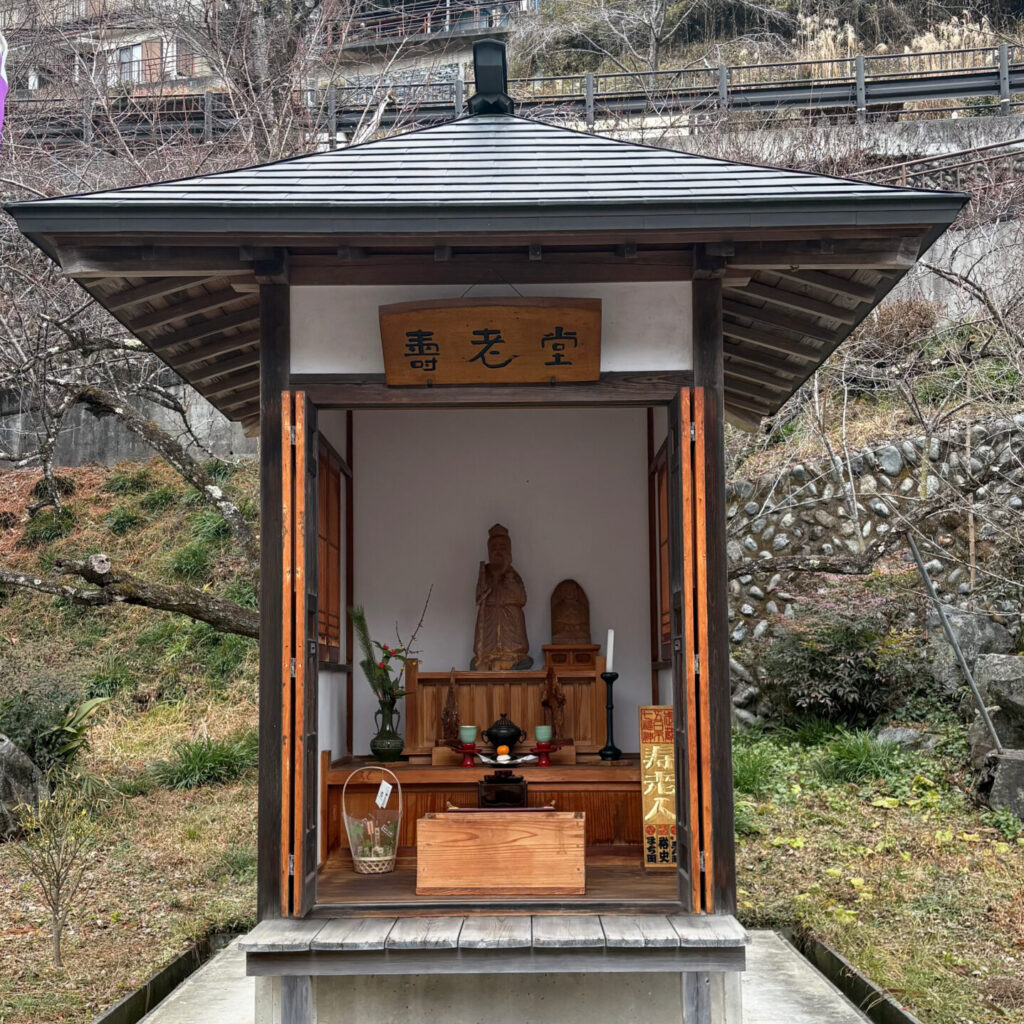
If you’d like to try Zen meditation, it’s best to contact the temple in advance. They have a dedicated hall for zazen, and the friendly head priest offers guidance tailored to your experience level.
(Phone: +81-42-596-2652)
J. Seoto Hot Spring
After completing the Shichifukujin Pilgrimage, how about wrapping up the day with a relaxing soak in a hot springs?
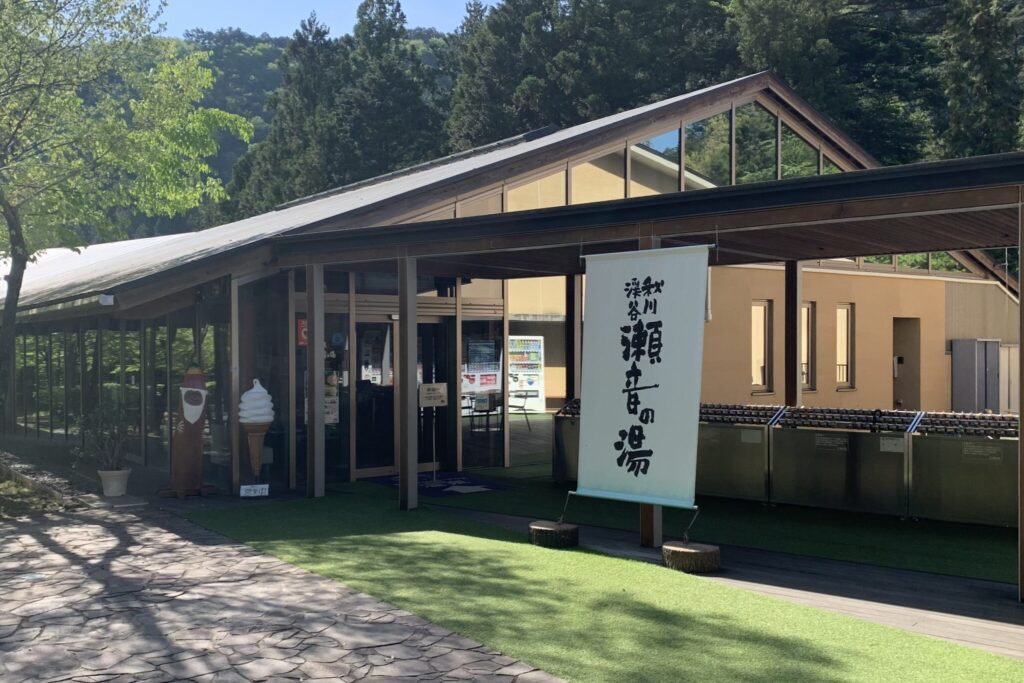
Let’s take a small detour and cross Ishibune Bridge (marked as ❶ on the map) —a perfect spot to enjoy a breathtaking view of the Akigawa Valley from above. After passing the bridge, you’ll find yourself at Seoto Hot Spring (marked as J on the map). Whether you want to soak in the hot springs to relax your tired muscles or browse souvenirs and local products, it’s all good.
On the way back, taking the bus back to JR Musashi Itsukaichi Station is the easiest option. However, since the bus from Seoto Hot Spring Bus Stop (marked as ❷ on the map) operates with a frequency of less than once an hour, if you anticipate waiting for more than ten minutes, it’s best to head to Jurigi Bus Stop (marked as ❸ on the map) instead. Jurigi Bus Stop, located along the river side, is in the right direction of the Musashi-Itsukaichi Station.
⇒ Do you want to know more about Akiruno City? Click here!
PR Your Stay Choice!
If you’d like to stay in a villa surrounded by nature and explore Akiruno with a local guide presented by Wabunka;
PR Your Stay Choice!
Fushi – A Private Gastronomic Retreat in the Lush, Nature-rich Akigawa Valley presented by Wabunka;